ⓘ Disclosure: This post contains affiliate links. If you buy through one of them, I may earn a small commission at no extra cost to you. As an Amazon Associate I earn from qualifying purchases. Images in this post are AI-generated virtual design concepts intended for inspiration. Linked products reflect the style and feel of the space, but are not exact matches.
The toddler rooms I’m drawn to have a little room for everything: favorite books within reach, somewhere to spread out a puzzle, and a few details that make you smile. The storage matters, but I don’t want it to be the only thing you notice.
These toddler room ideas bring those two sides together. I’d start with how the space will be used each day, then let the rug, the prints and the soft evening light give it its personality.
Jump to: Quick Picks · Plan the Room · Walls · Personality · Sleep Zone · Where I’d Start · FAQ
Start With the Toddler Room Problem
That Bugs You Most
You probably don’t need all three — I’d fix the biggest daily frustration first and let the rest wait.
Loose toys everywhere
Shelf storage bins give each kind of toy one clear home. Measure inside each cubby, not the shelf.
Books piling up
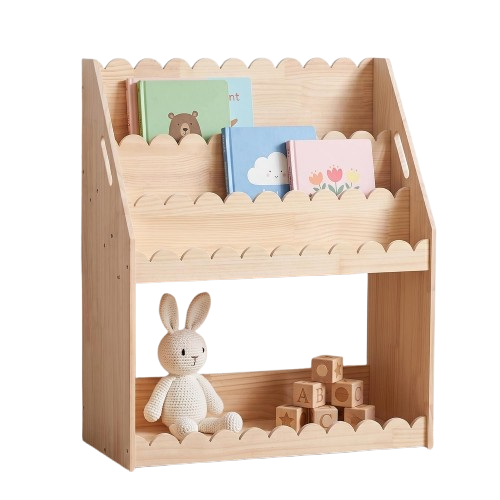
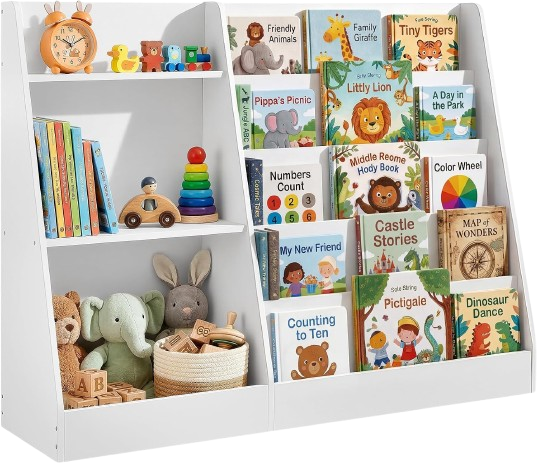
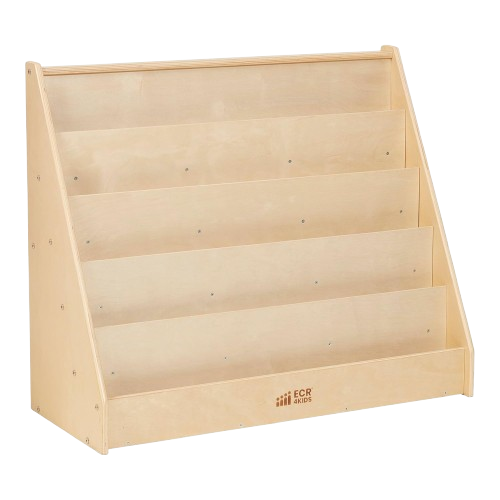
A front-facing bookshelf lets a toddler see the covers and choose. Face-out shows fewer books at once.
Nowhere to draw
A wooden toddler table gives drawing and puzzles a fixed spot. Leave room for the chairs to pull out.
Plan the room around everyday use
1. Create Simple Zones Before You Decorate
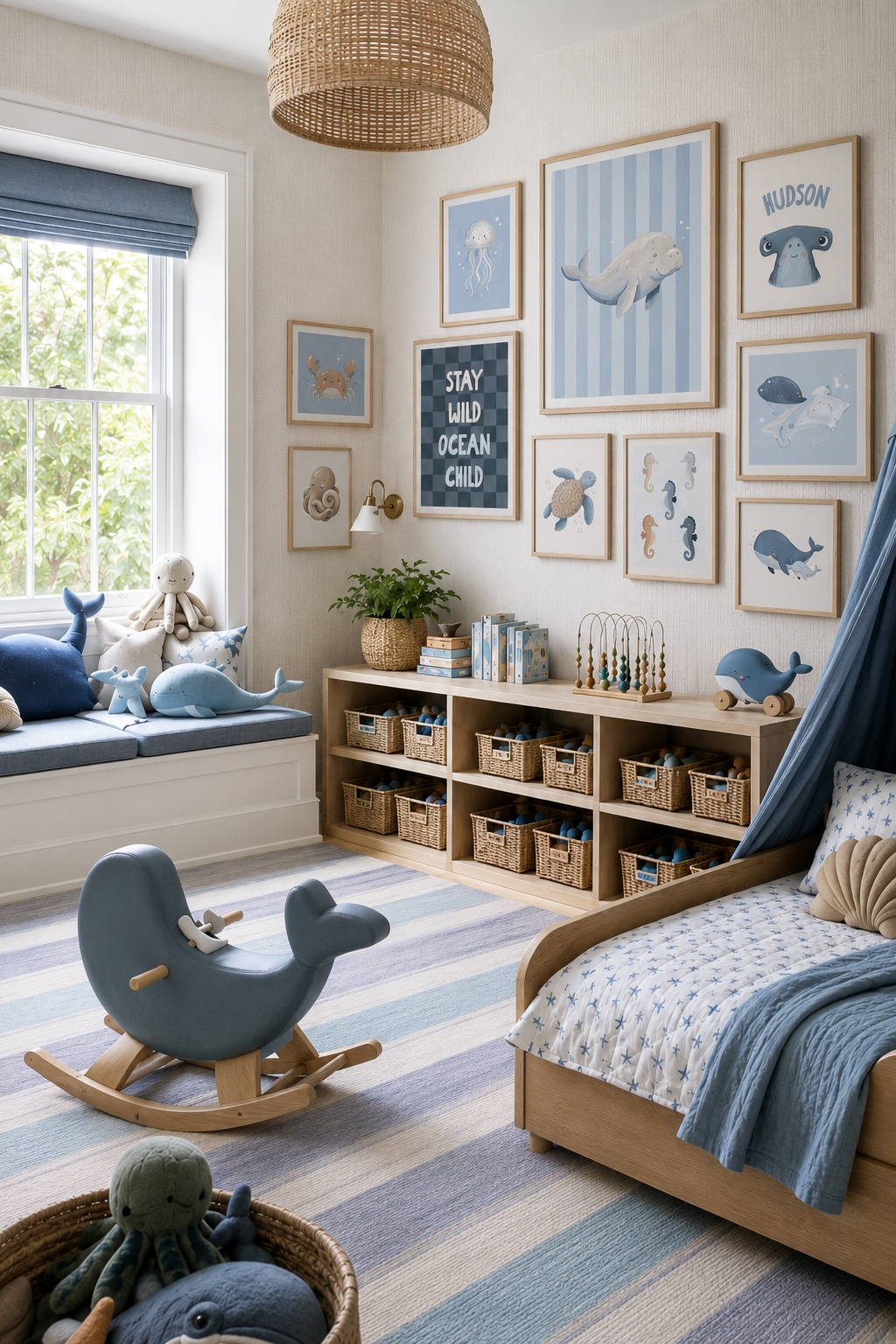
I like to think in three functions — sleeping, playing, storage — and let them overlap. A reading spot can share space with the book storage, and the floor in front of a low shelf becomes the play area. You rarely need four separate corners.
A clear route between the bed and the door comes first. After that, notice where your child naturally plays and drops things; those everyday habits can help you decide where storage will be most useful.
Try this before buying: tape out the furniture’s footprint with painter’s tape — including room to open drawers and pull out chairs. Something can fit and still make the room awkward to move around in.
2. Choose One Main Storage Piece
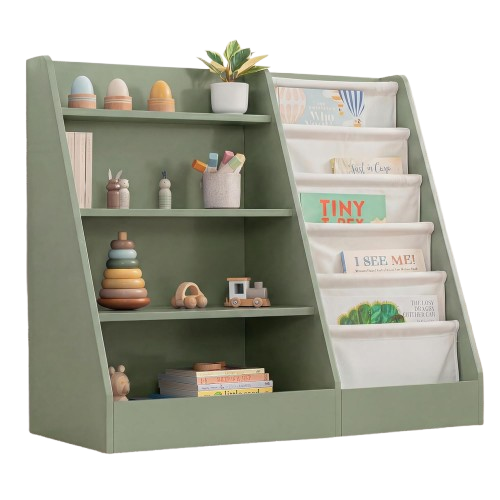
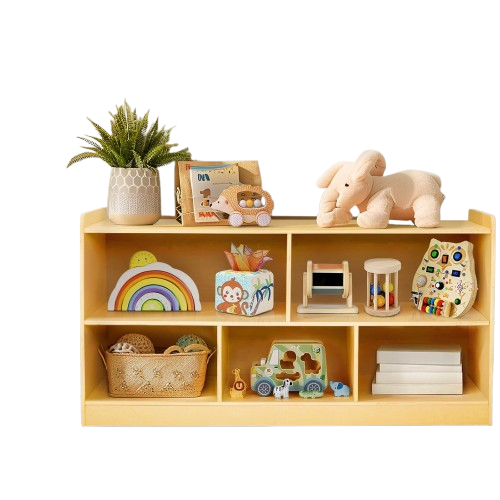
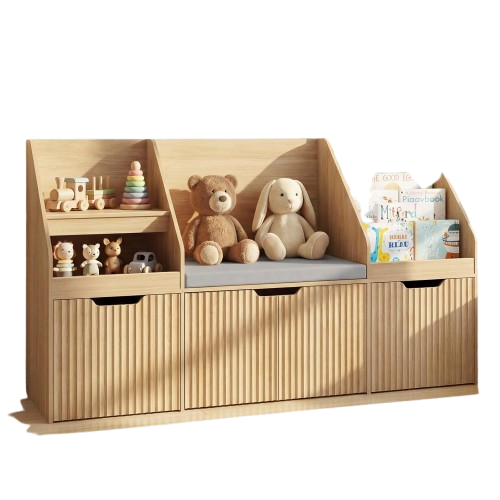
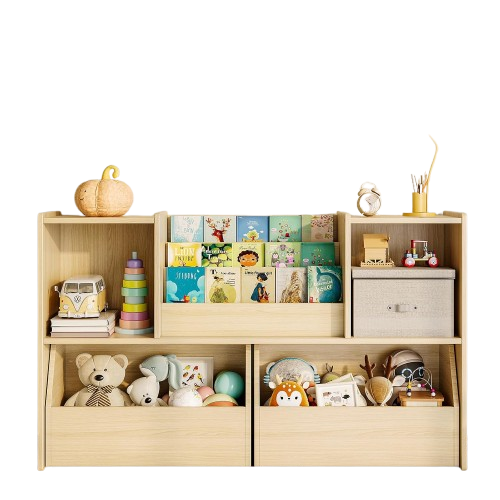
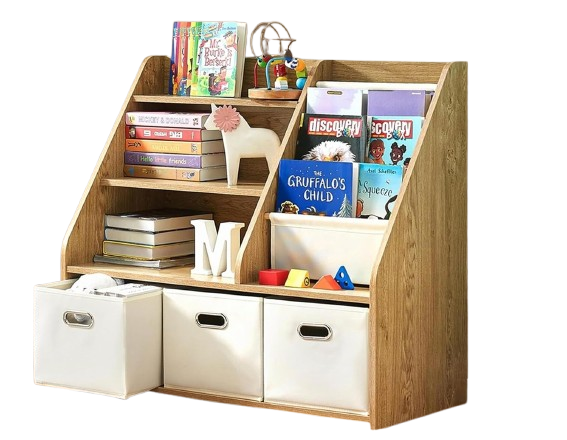
If the bed and clothes storage were already sorted and I could add just one thing, a well-chosen toy storage piece would be high on my list. I like a combination unit when books and toys need separate homes but there isn’t room for two pieces of furniture.
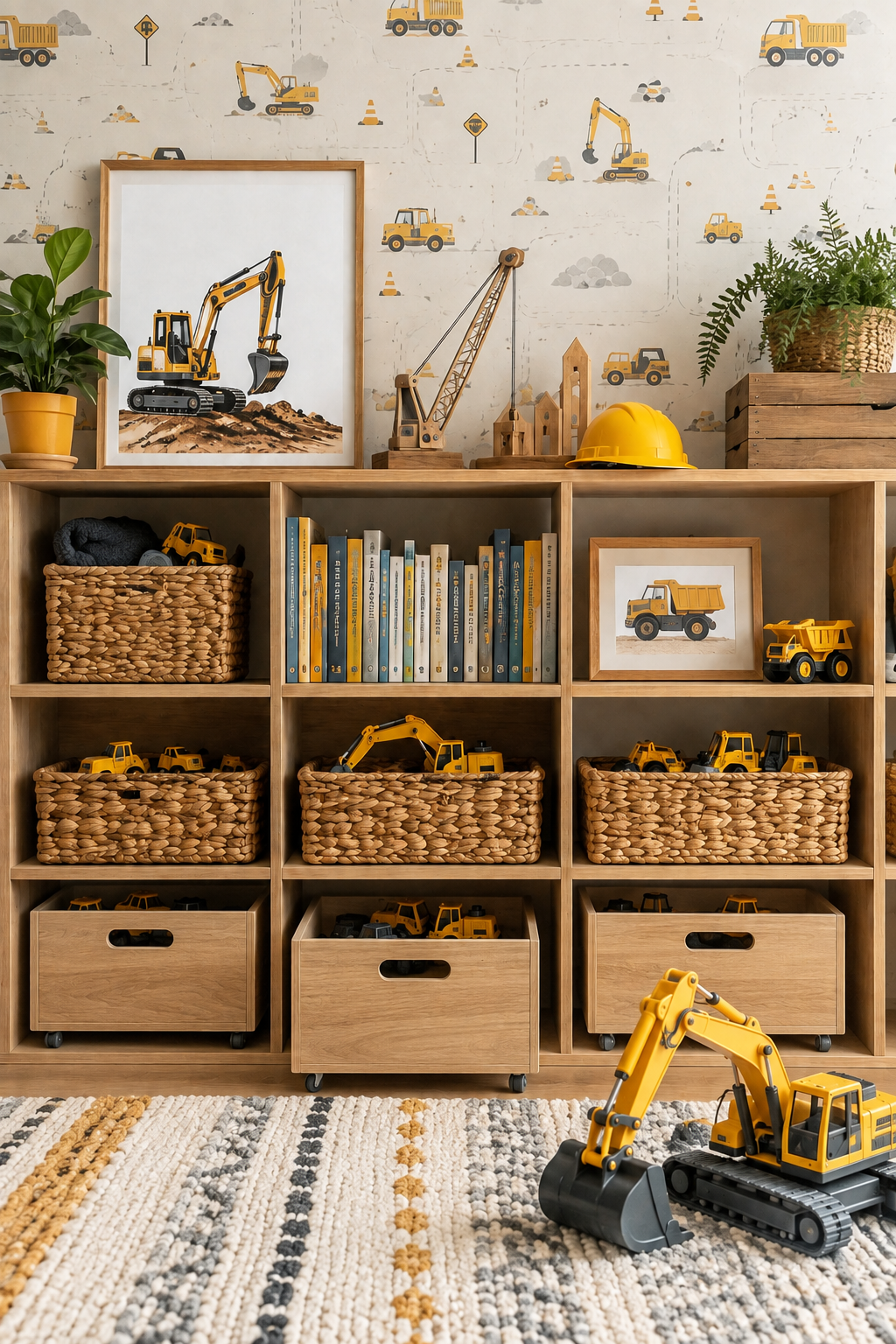
Best for: book and toy storage in one spot
Bookcase with cubbies + rolling toy bins
What I like here is that books and loose toys get separate homes without two separate pieces of furniture. The cubbies keep everyday favorites in reach, and the whole thing still makes sense later, when the blocks turn into craft supplies.
The one thing I’d weigh: the rolling bins need room to pull out without blocking the main walking route. That extra space belongs in the measurements too.
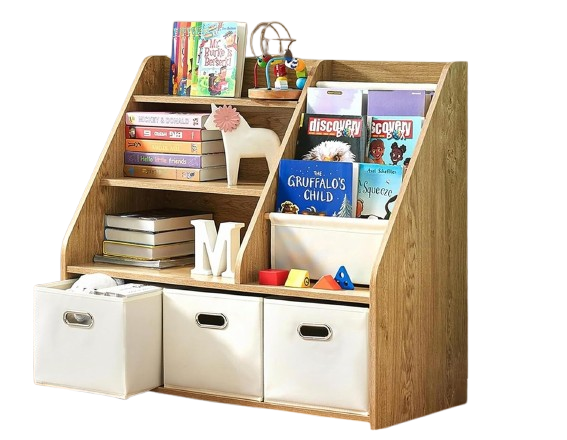
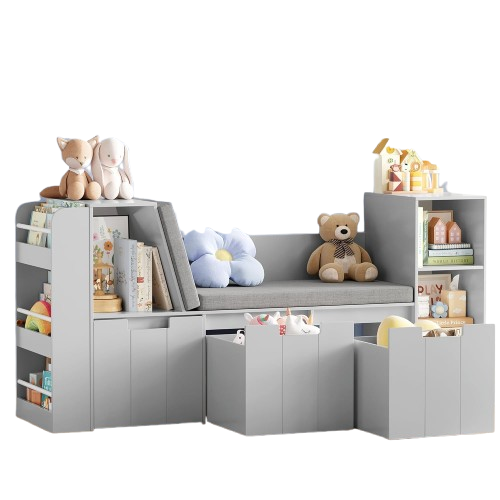
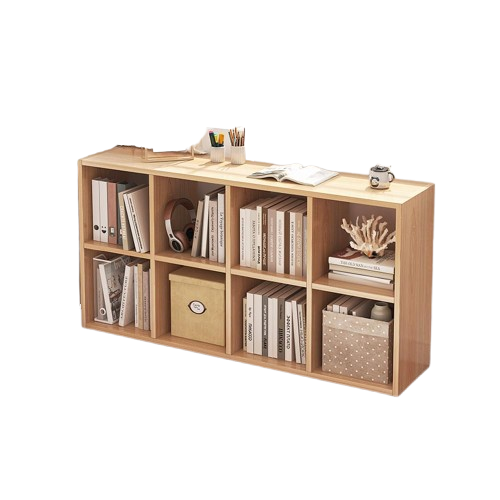
3. Keep Favorite Toys Within Reach
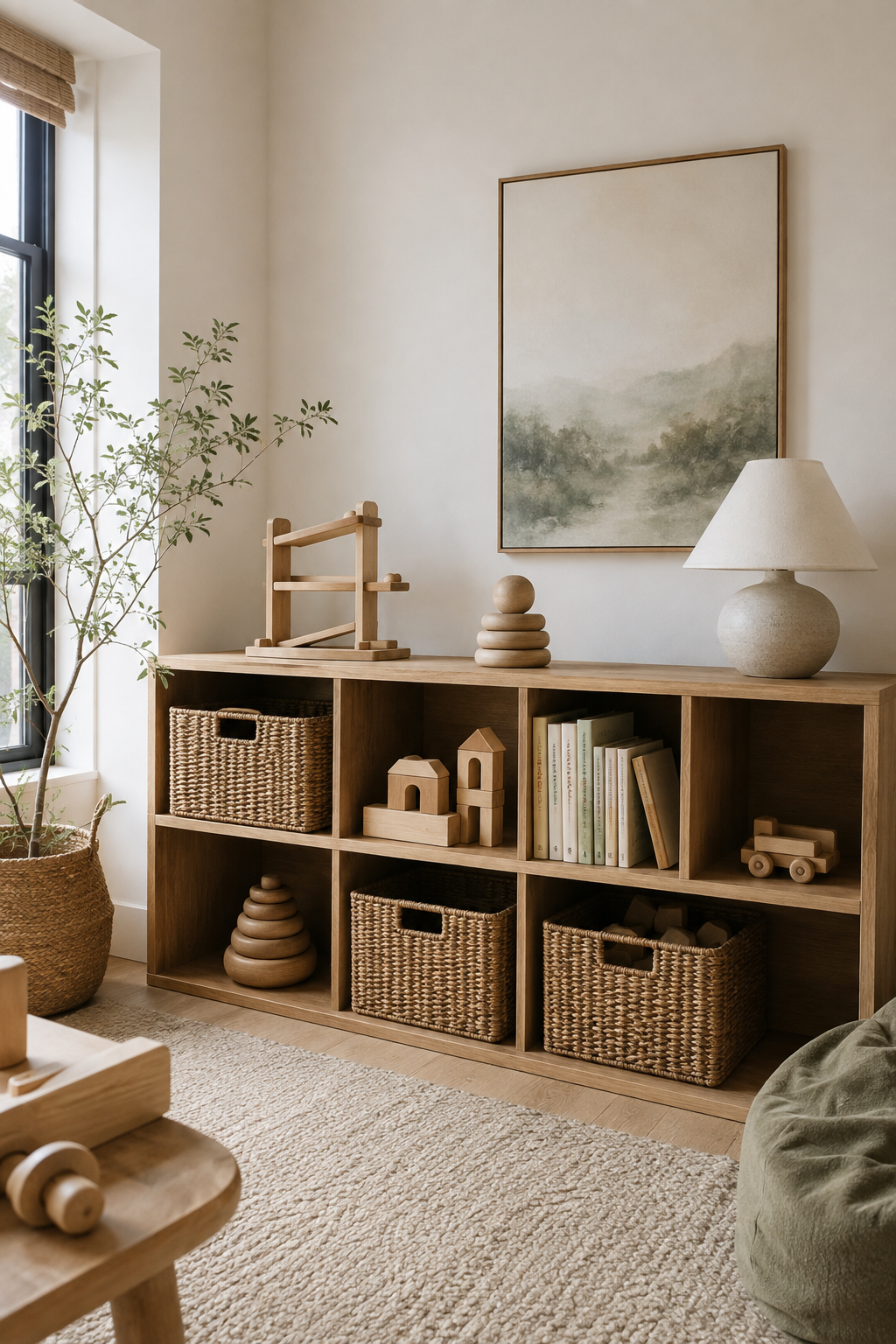
I prefer the look of a smaller, visible selection to shelves filled edge to edge. It can also make choosing a toy less overwhelming. If interest fades, rotating a few stored toys back in may help familiar favorites feel interesting again. Broad categories keep the setup simple: blocks, vehicles, dolls, soft toys, puzzles and art supplies.
A toddler shouldn’t need to understand your filing system to put away a truck.
If the shelves still look crowded right after cleanup, I’d take a few toys out of rotation before buying another organizer. More storage sometimes just gives the clutter a bigger home.
4. Use Baskets for the Things That Never Stay Neat
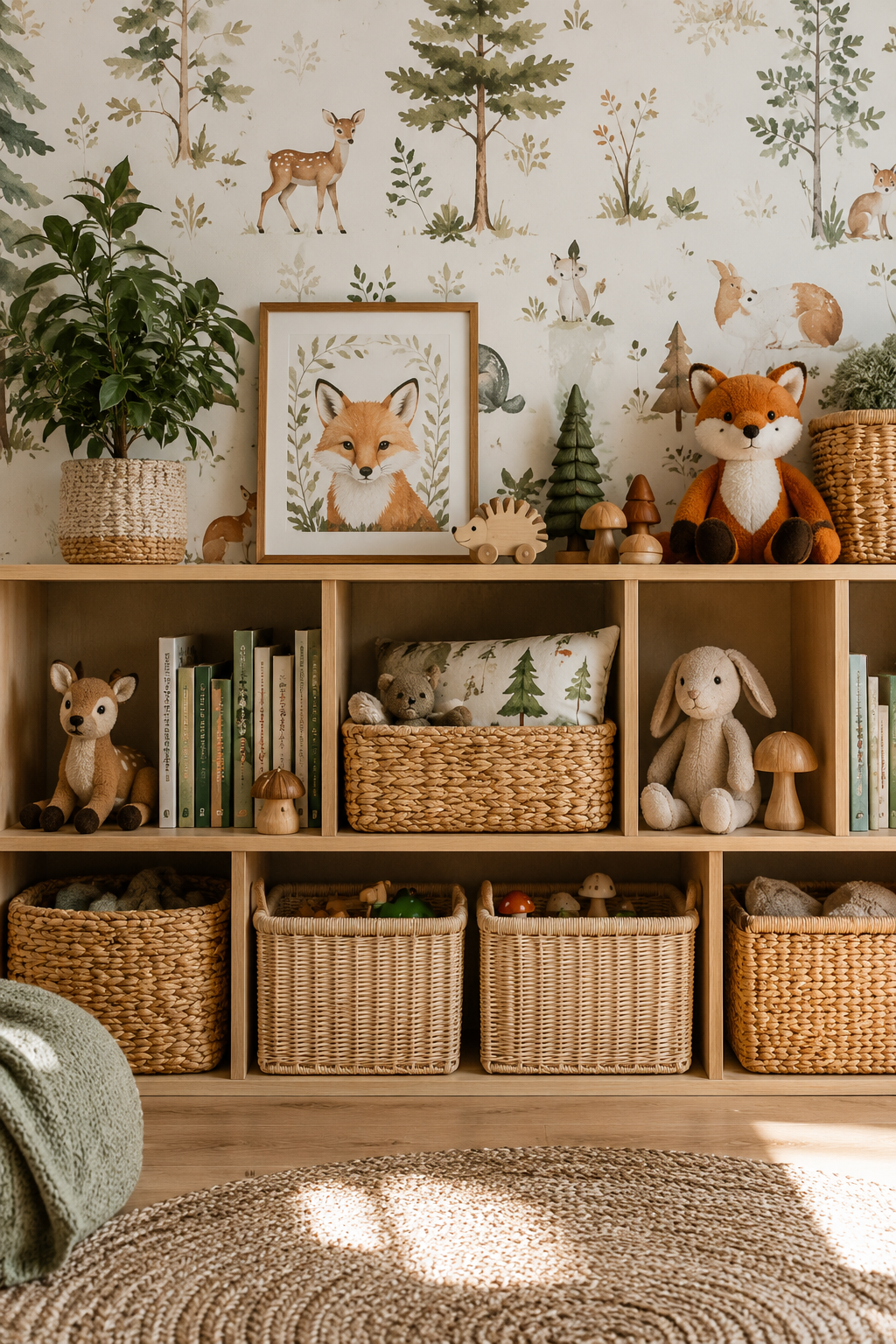
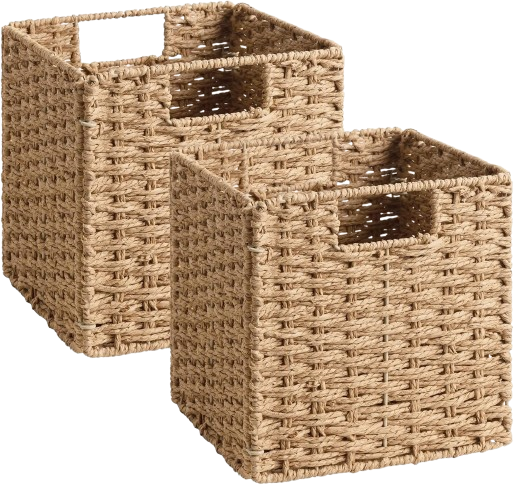
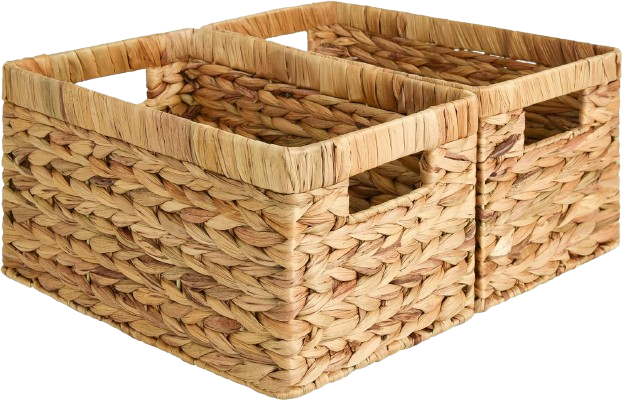
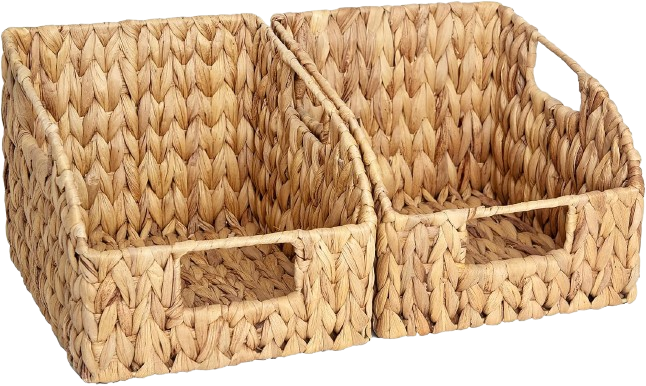
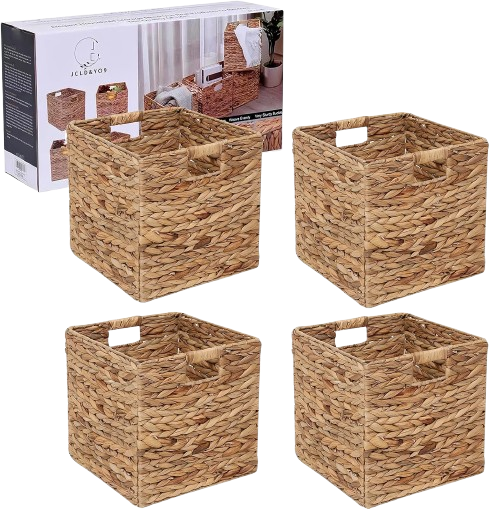
For the toys that never really stay tidy — stuffed animals, blocks, dress-up clothes — I like open baskets. A whole category has one obvious home, with no lid or little compartments to negotiate. On a low shelf, that can make putting things away easier to join in with. The main thing to watch is weight: even a small bin can become heavy when it’s full of blocks.
The style I’d start with: simple cubby storage bins on Amazon. A small picture label can help show what belongs in each one.
Use the Walls in a Small Toddler Room
Without Making Them Busy
5. Let the Walls Work Harder in a Small Toddler Room
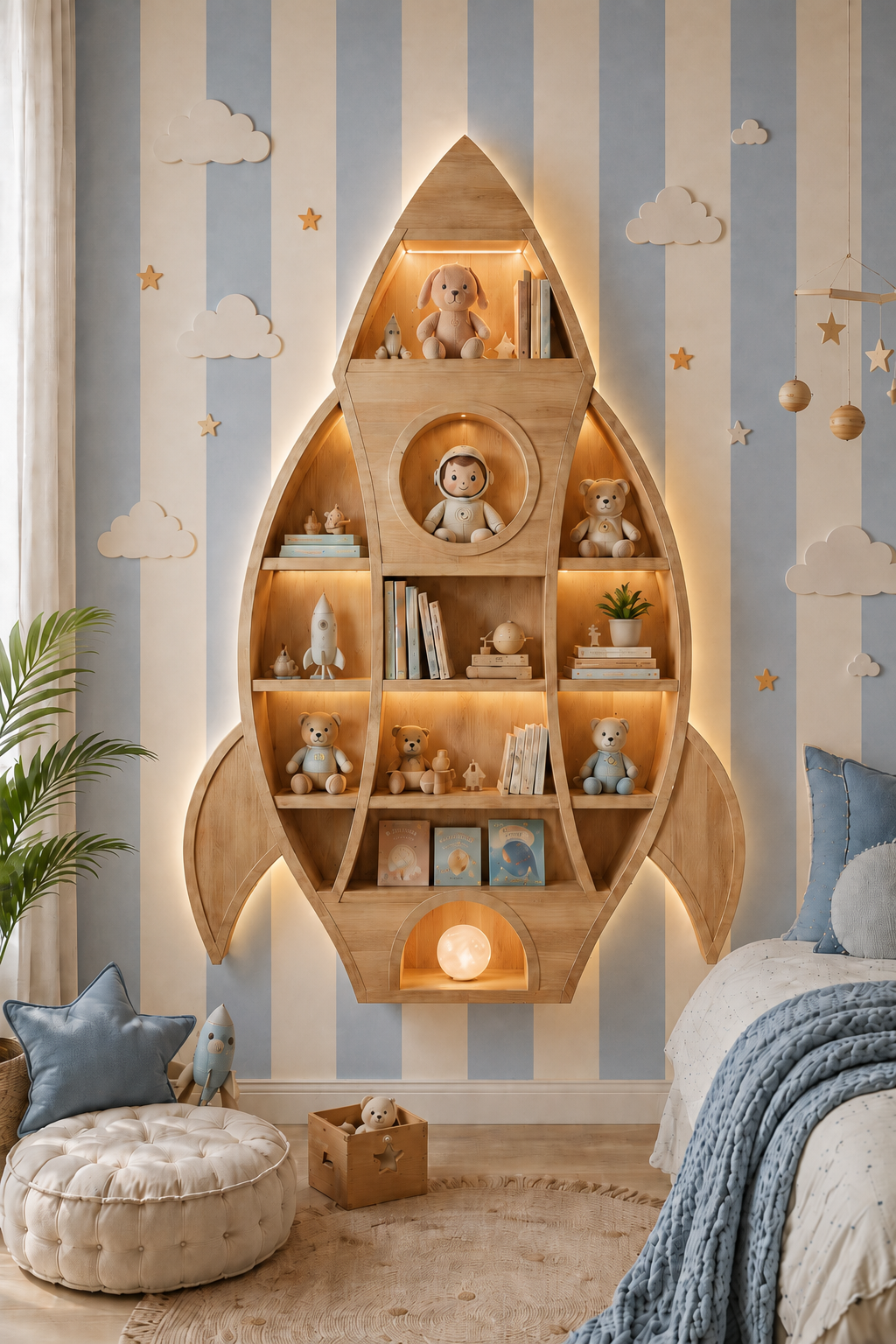
When the floor is tight, I look up before adding another cabinet. A few securely fixed hooks hold a bag or tomorrow’s outfit; a shallow ledge displays a couple of favorite books. I’d keep everyday things at a comfortable height and leave the rest higher, for an adult to hand down.
6. Make Favorite Books Easy to See
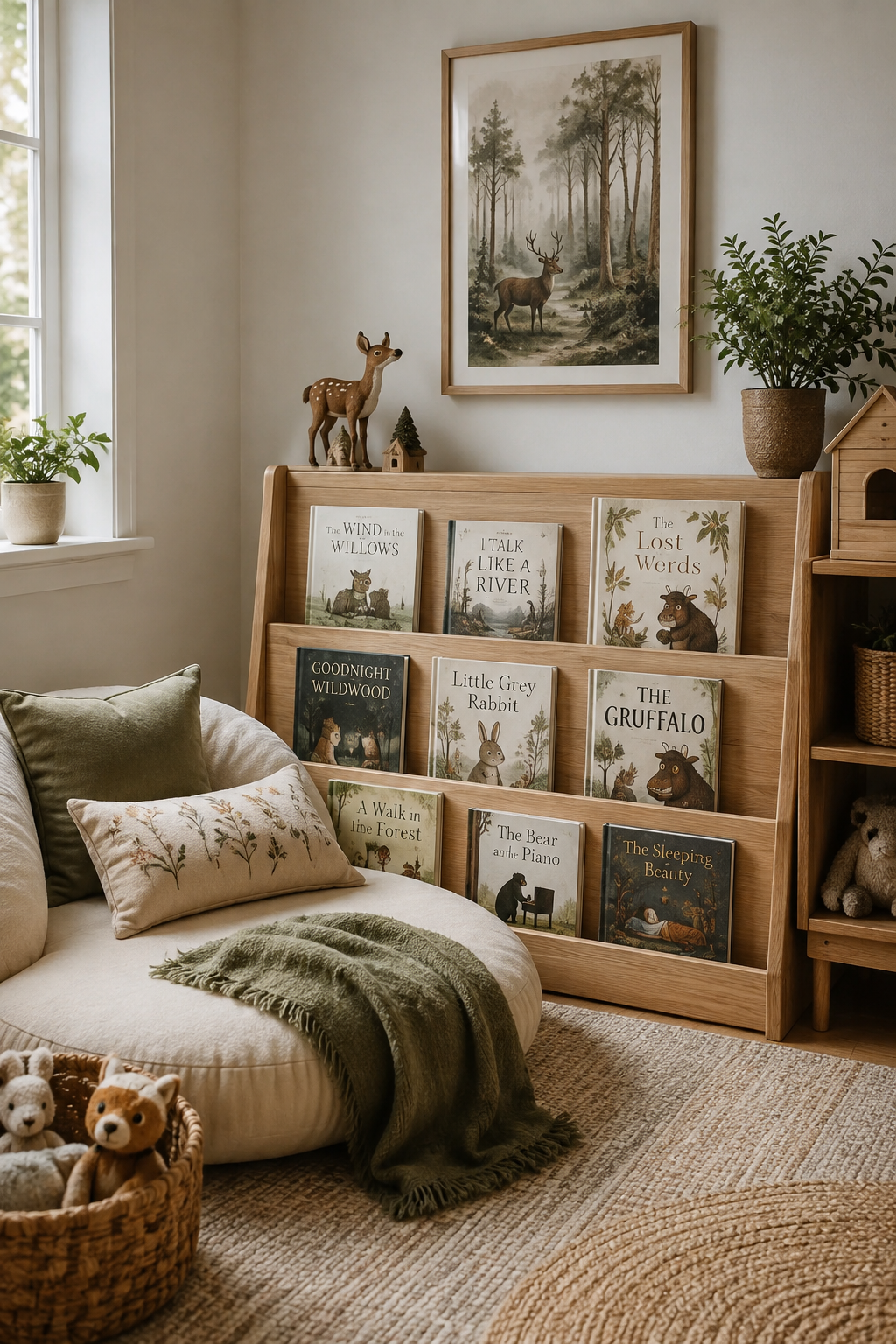
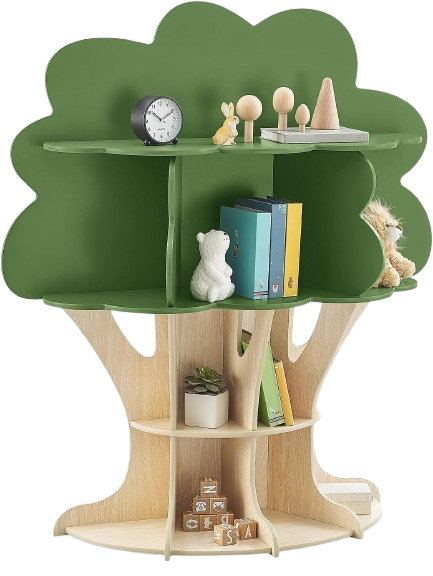
Front-facing storage works because a toddler recognizes a cover long before they can read a spine. I’d use it for a rotating handful of favorites rather than the whole shelf. This is one place a real choice comes up — full-size or mini — so here’s how I’d weigh them:
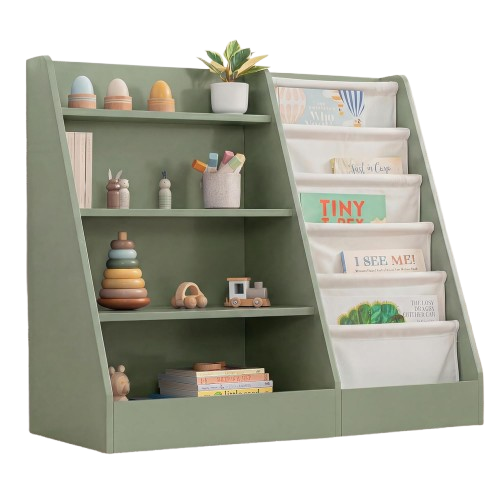
Standard front-facing bookshelf
My pick for a dedicated reading corner — several covers on show at once, and it becomes a lovely feature in its own right.
Before choosing: compare its width with the available space, and check the shelf dimensions against your tallest picture books.
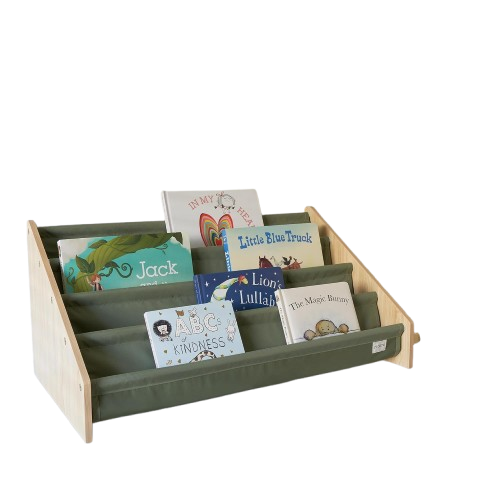
Mini front-facing bookshelf
What I’d choose for a small room or a bedside handful of bedtime books — it keeps a few covers uncrowded without dominating.
Trade-off: a smaller display suits a limited selection, so a larger collection may need storage elsewhere. Check the dimensions before deciding which version fits.
7. Put the Reading Spot Beside the Books
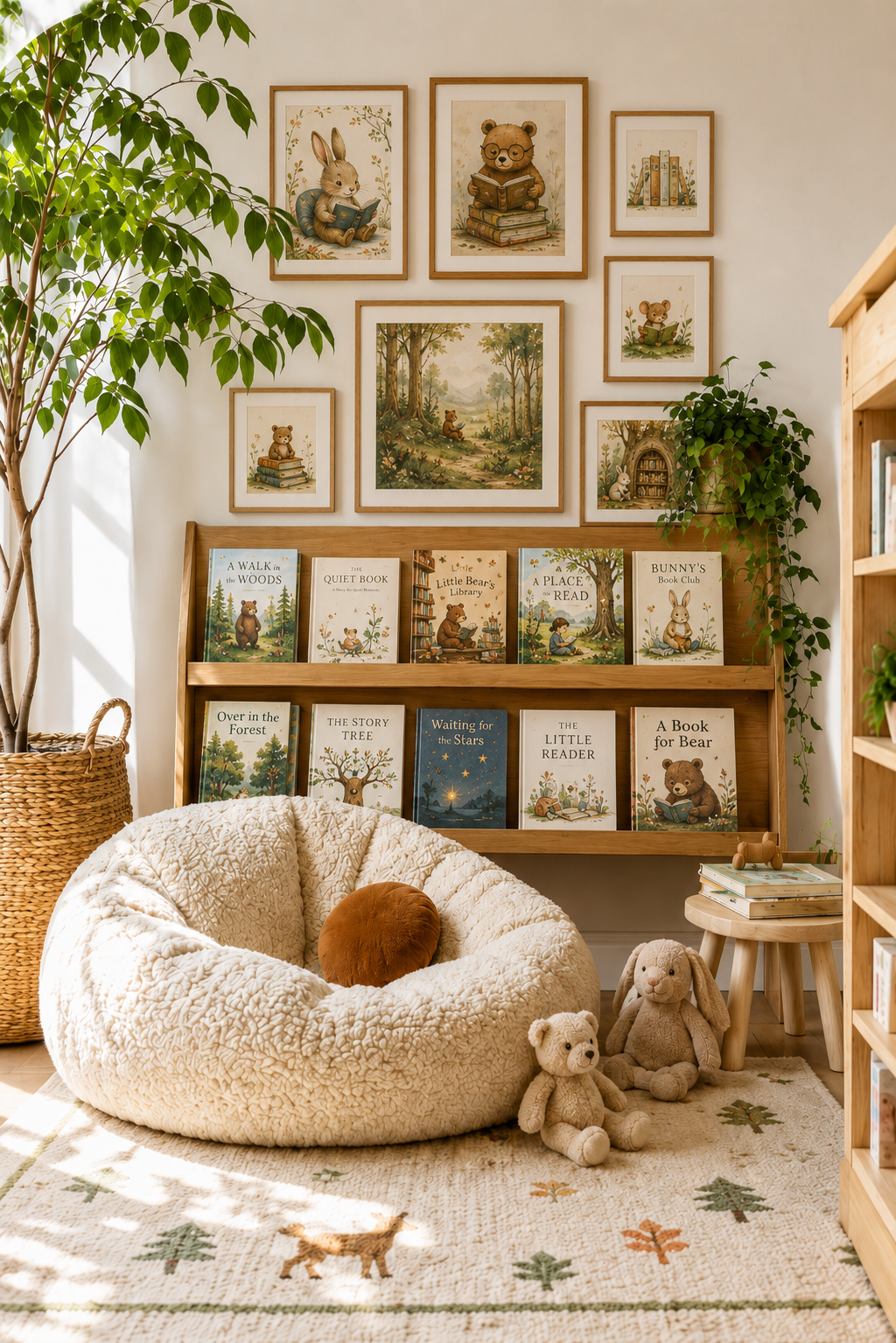
A reading corner works best when a child can pick a book and settle without crossing the room. For me, what makes one inviting isn’t a canopy and six cushions — it’s a soft pool of light, a cushion low enough to flop straight into, and a few books at eye level. I’d also leave room for a grown-up to squeeze in alongside, because that’s how it tends to get used.
Shop Front-Facing Bookshelves
Add personality without adding clutter
8. Anchor the Play Area With One Good Rug
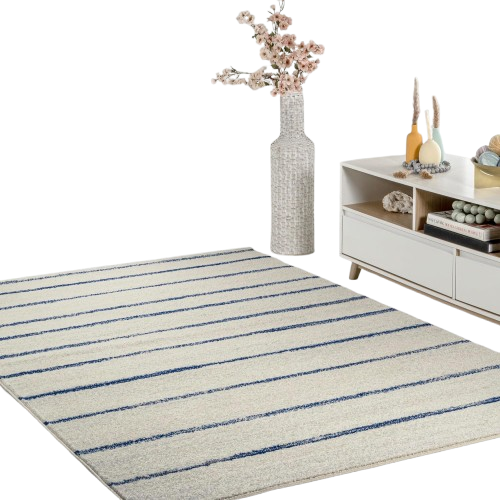
A rug is where I’d let the color live. What draws me to a soft blue-and-cream stripe is that it warms the room and grounds the play area, which lets the walls, storage and bedding stay quiet — the toys bring plenty of color on their own. I’d start with size: one that reaches under the main pieces makes a room feel calmer and more pulled together than a small one floating in the middle.
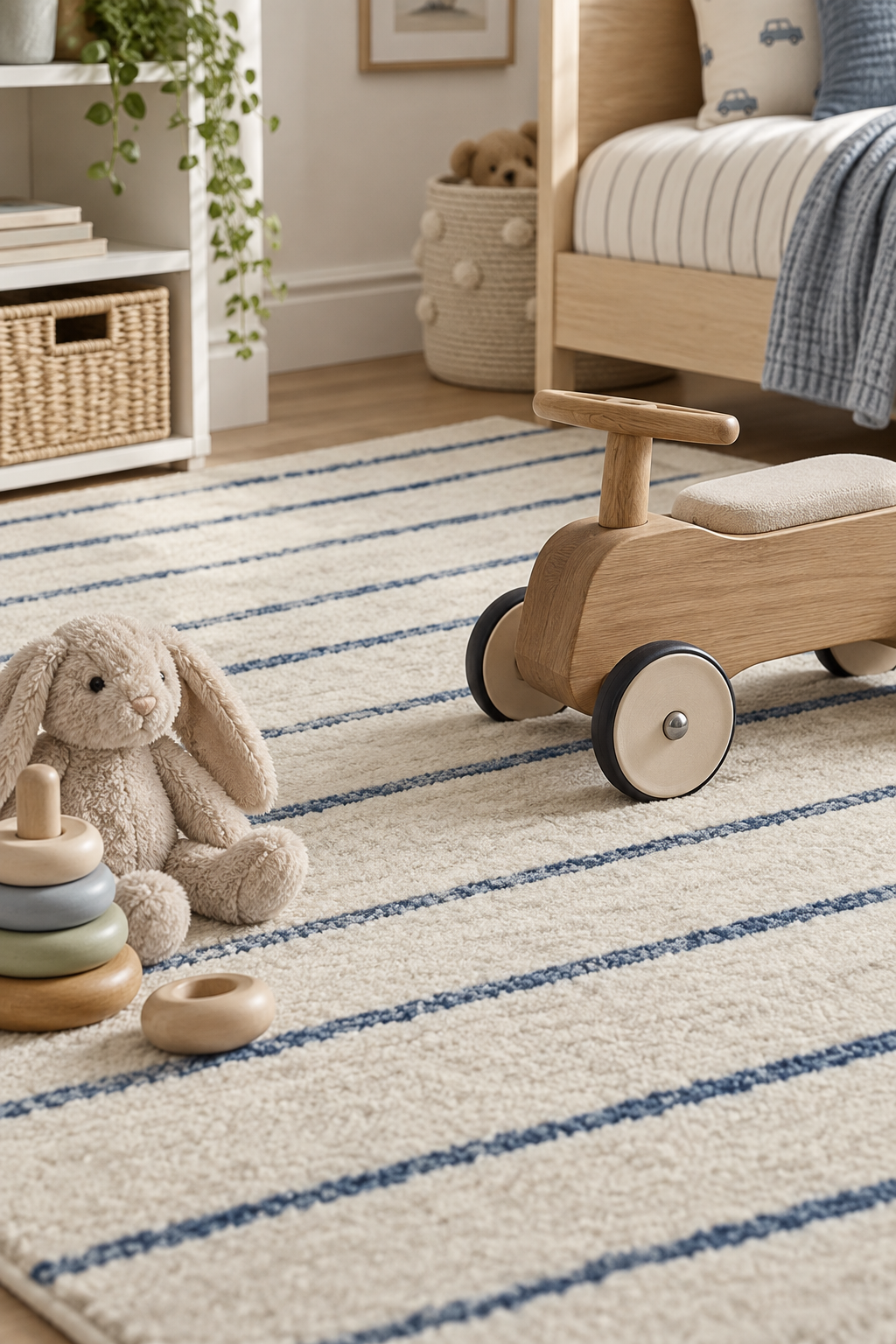
AI-styled visualization featuring the linked rug as the design reference. Please check the retailer listing for exact product details.
Best for: one calm pattern that carries the palette
Striped area rug in blue & cream
It’s the pattern I’d build the rest of the room around. The blue-and-cream stripe brings in a playful detail while leaving plenty of room for colorful books and toys.
The one thing I’d weigh: for floor play, I’d want a comfortable texture and a cleaning routine I could manage. Check the material, backing and care instructions for your chosen size; don’t assume it’s machine washable.
9. Add a Toddler Table Only if It Will Be Used
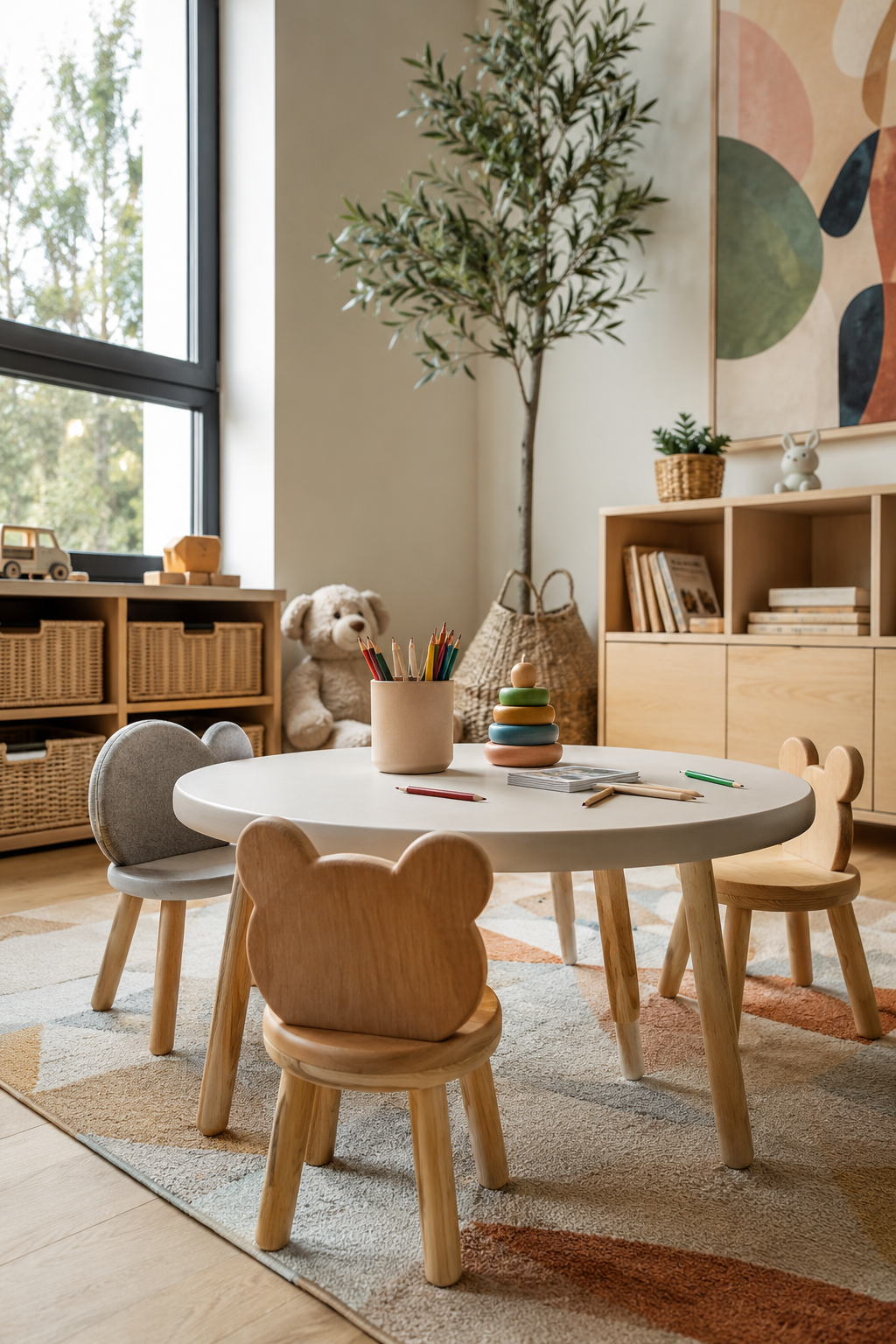
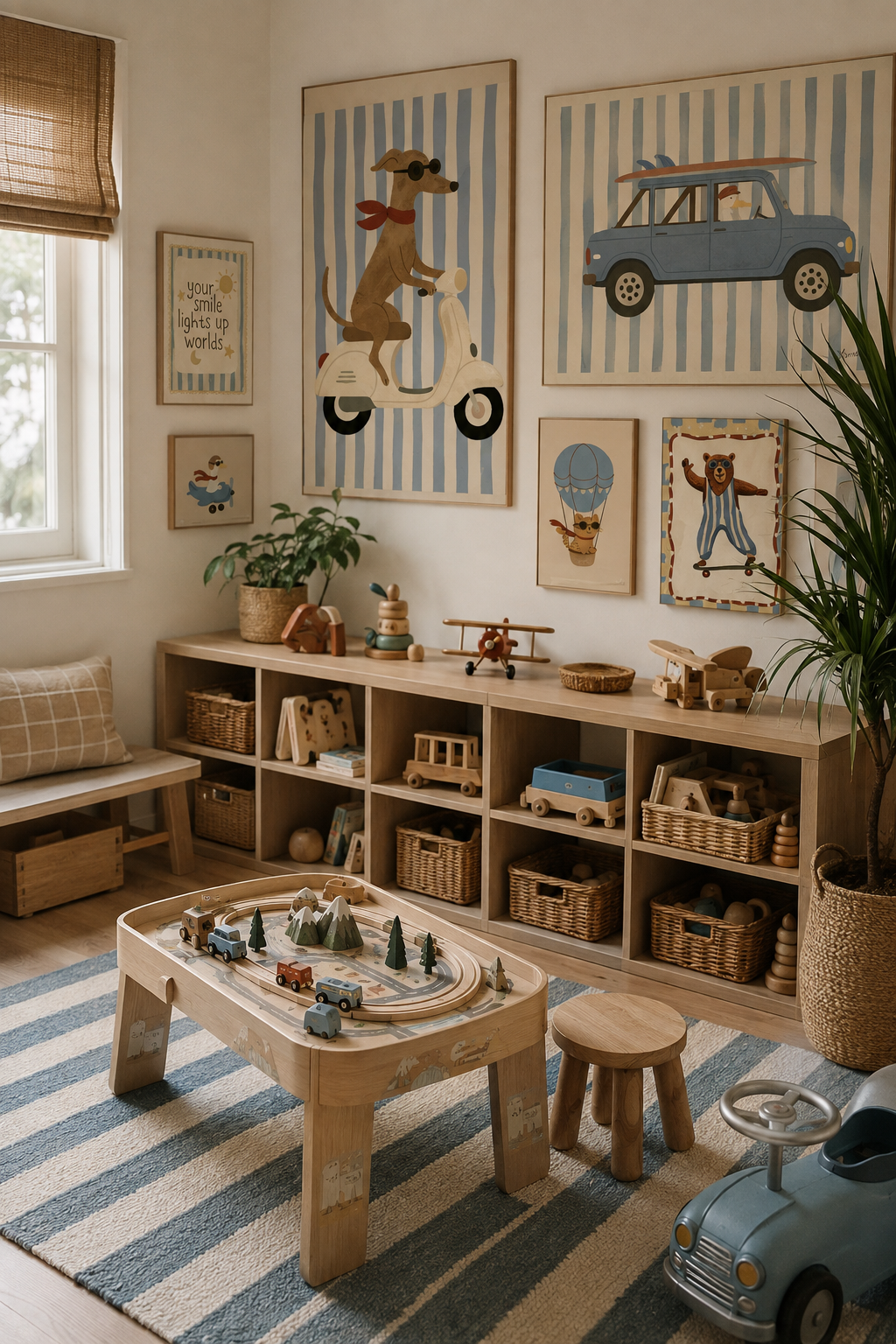
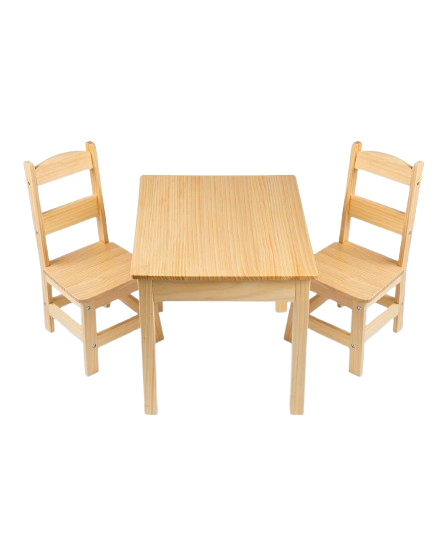
A child-size table can be lovely for drawing and puzzles, but it takes away some open floor space. I’d skip it if the family table already does the job. For a child who enjoys seated play, this simple wooden table-and-chair set is the kind of design that could suit several room themes. Check the seat height, finish and cleaning instructions before choosing.
10. Choose One Playful Theme — Then Let It Breathe
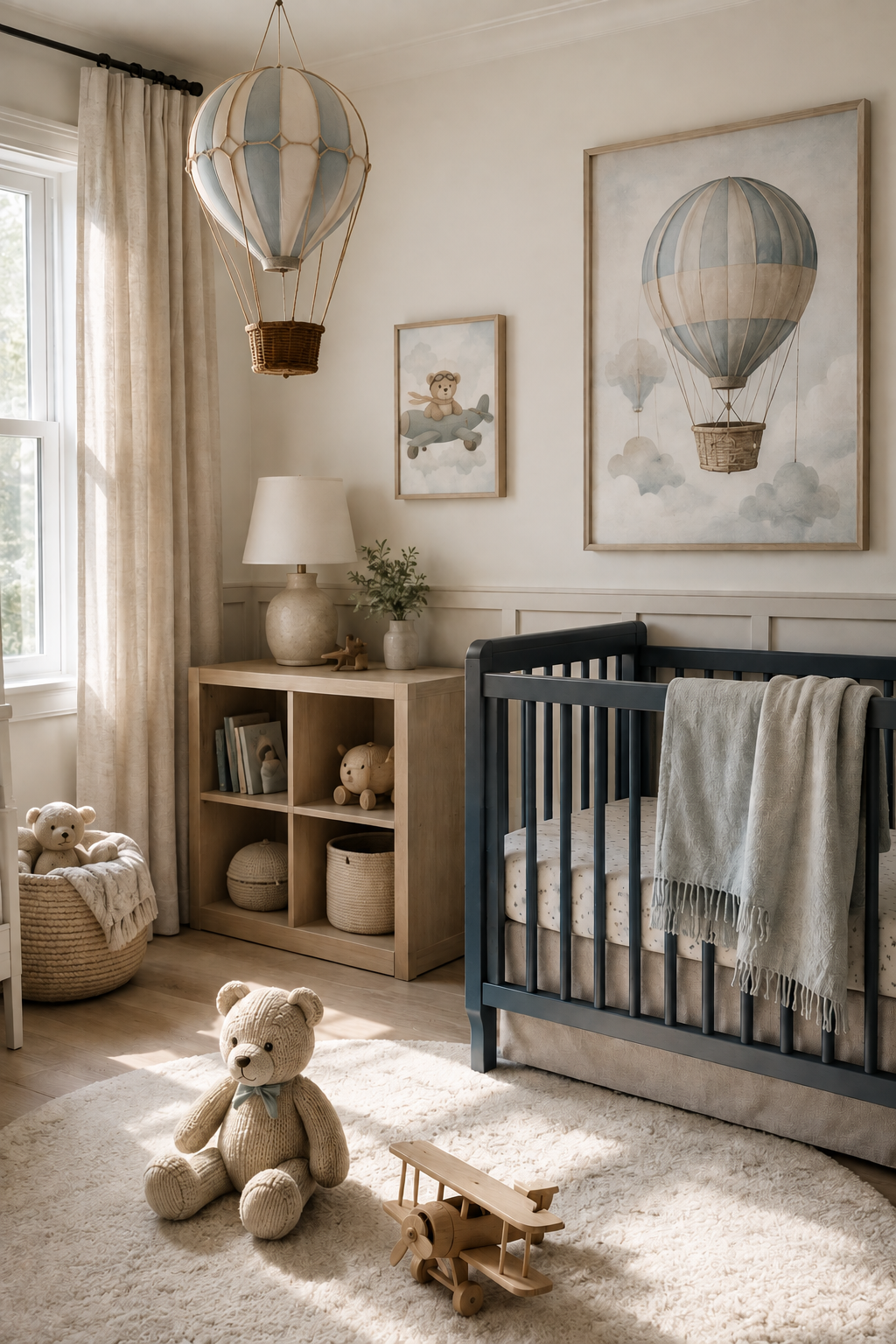
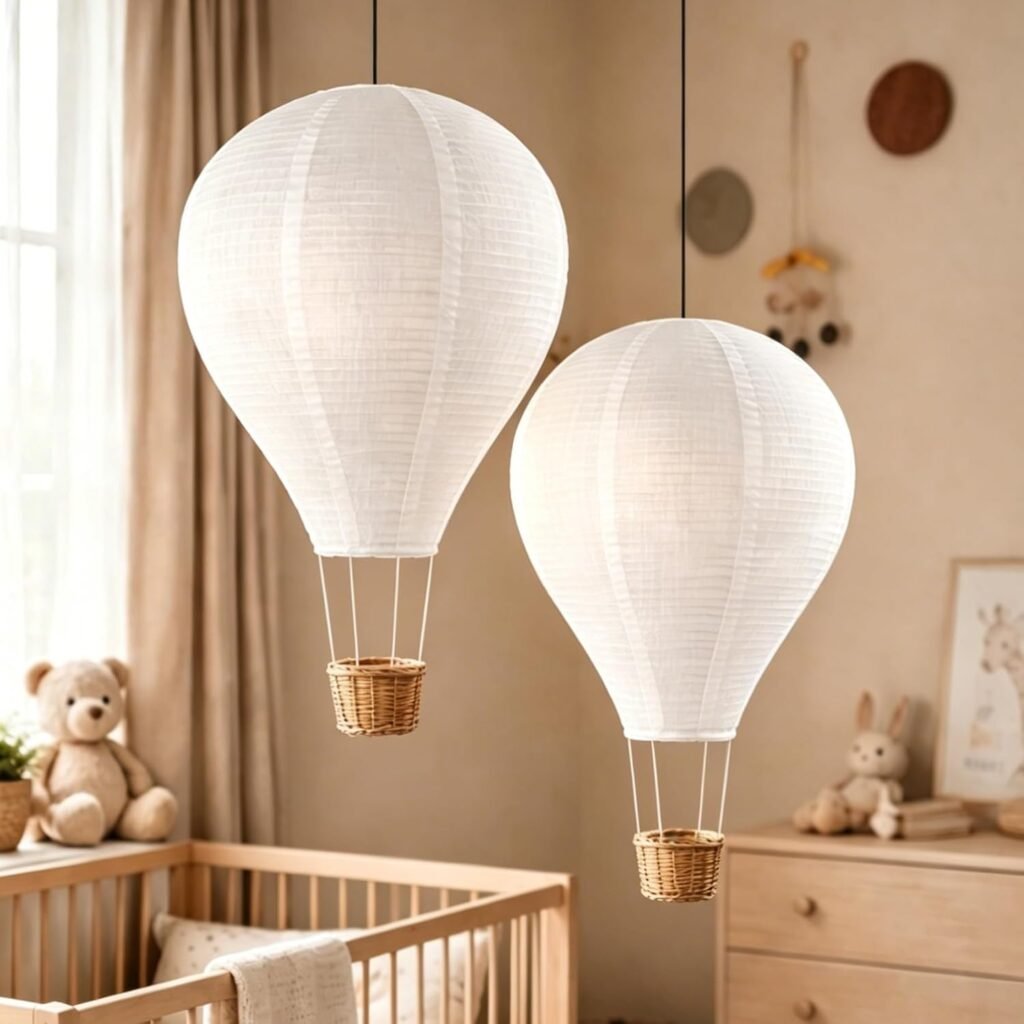
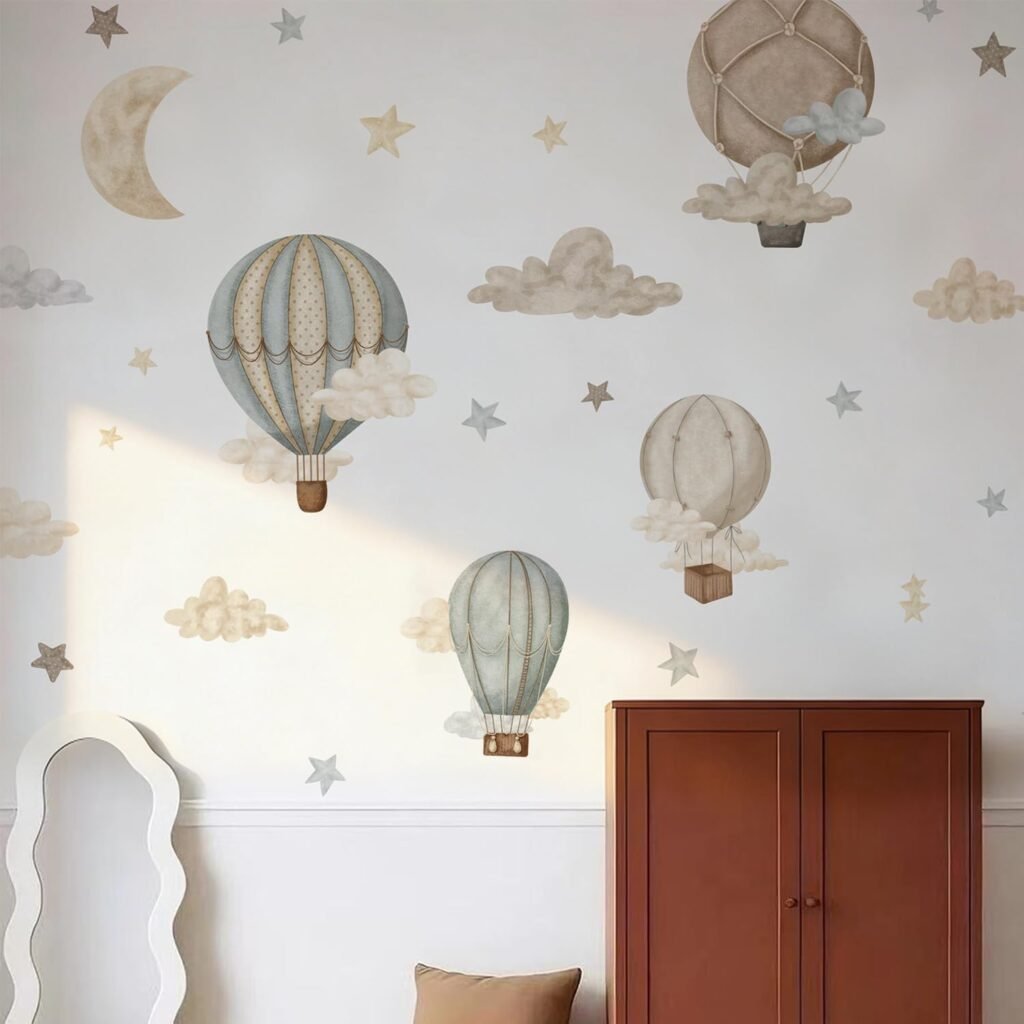
I like a theme most when it shows up in just a few lovely details. For a hot-air-balloon room, I’d start with the artwork and one cushion, and let the bigger pieces stay simple. When the same motif appears on every surface, it feels a little too coordinated for my taste. Keeping it to a few accents also makes it easier to change direction later.
11. Let the Art Do More of the Decorating
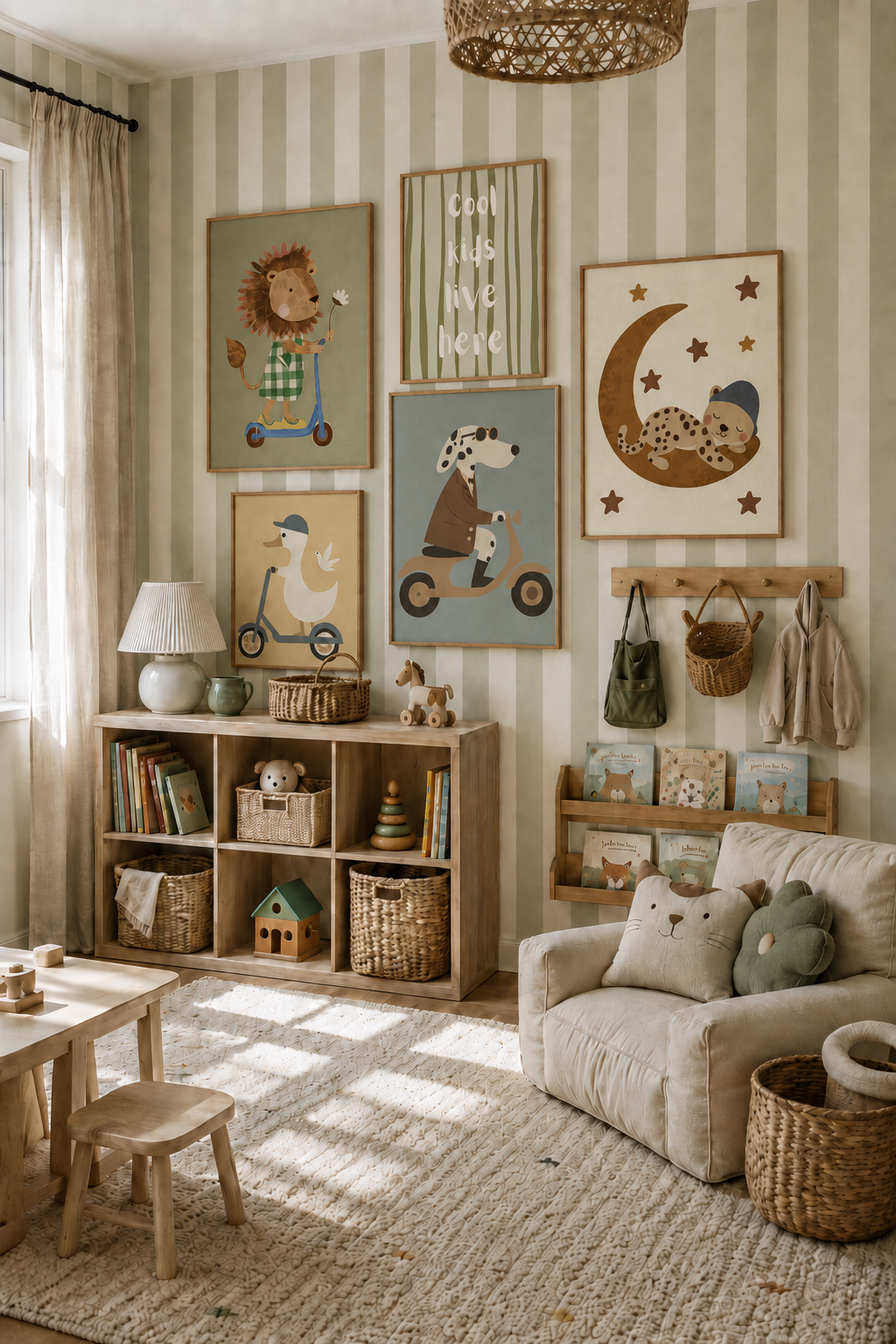
Art adds character without taking floor space, which makes it my favorite way to bring in a theme. I’m drawn to gentle animal illustrations in a muted palette — a family of woodland prints, say — grouped as two or three coordinated frames rather than a wall of tiny objects. Vary the sizes but keep the finish or palette consistent, and leave a little empty wall around the group; that breathing room is what makes it feel intentional.
12. Repeat Two or Three Colors Around the Room
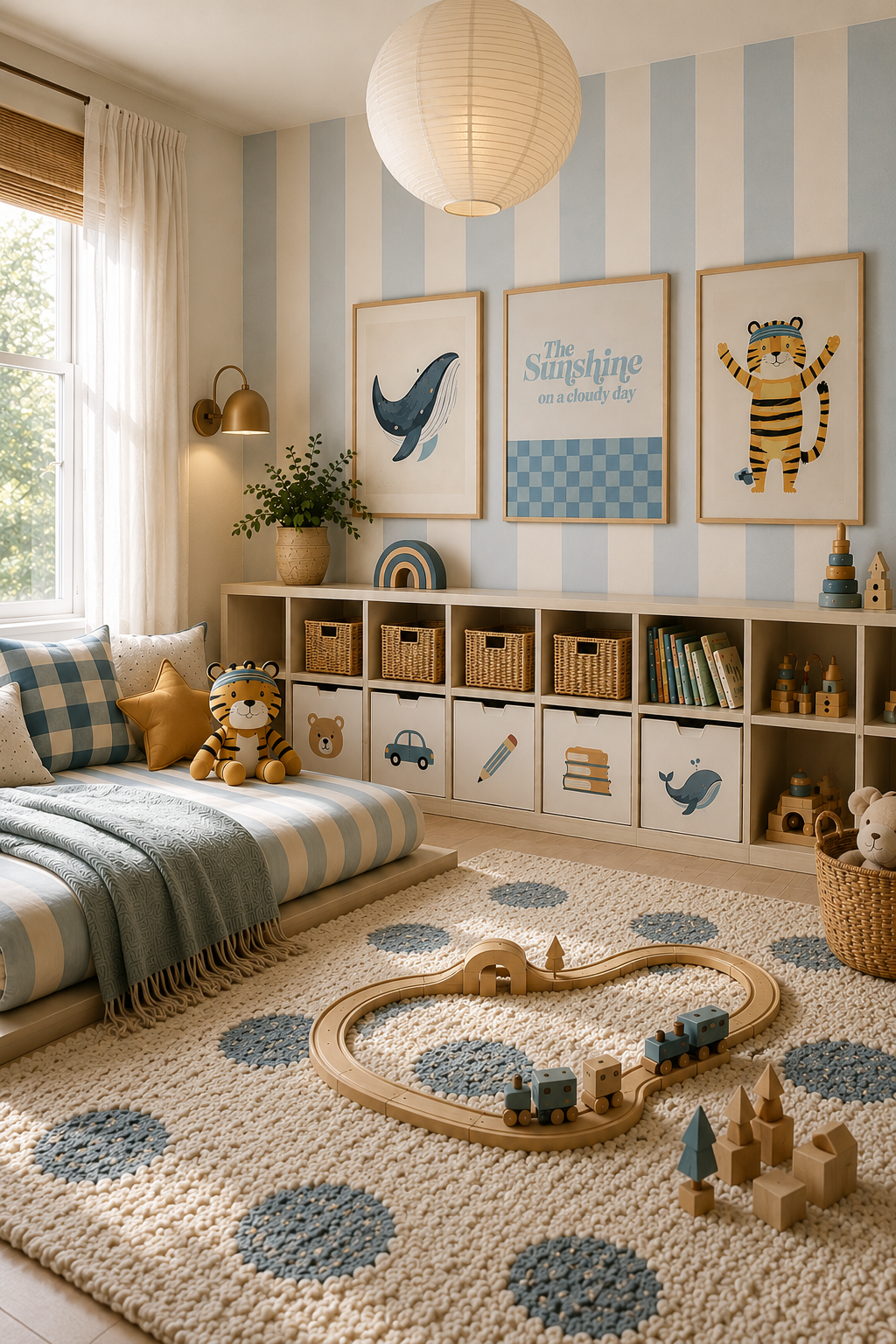
I tend to pick a starting point — usually the rug — and echo two or three of its colors around the room, then leave it there. The reason I stop is that the toys are part of the palette too, even though nobody bought them to match; keeping the big surfaces quiet gives all that everyday color somewhere to sit without the room feeling loud.
Create a Calmer Sleep Zone
13. Reduce Visual Activity Around the Bed
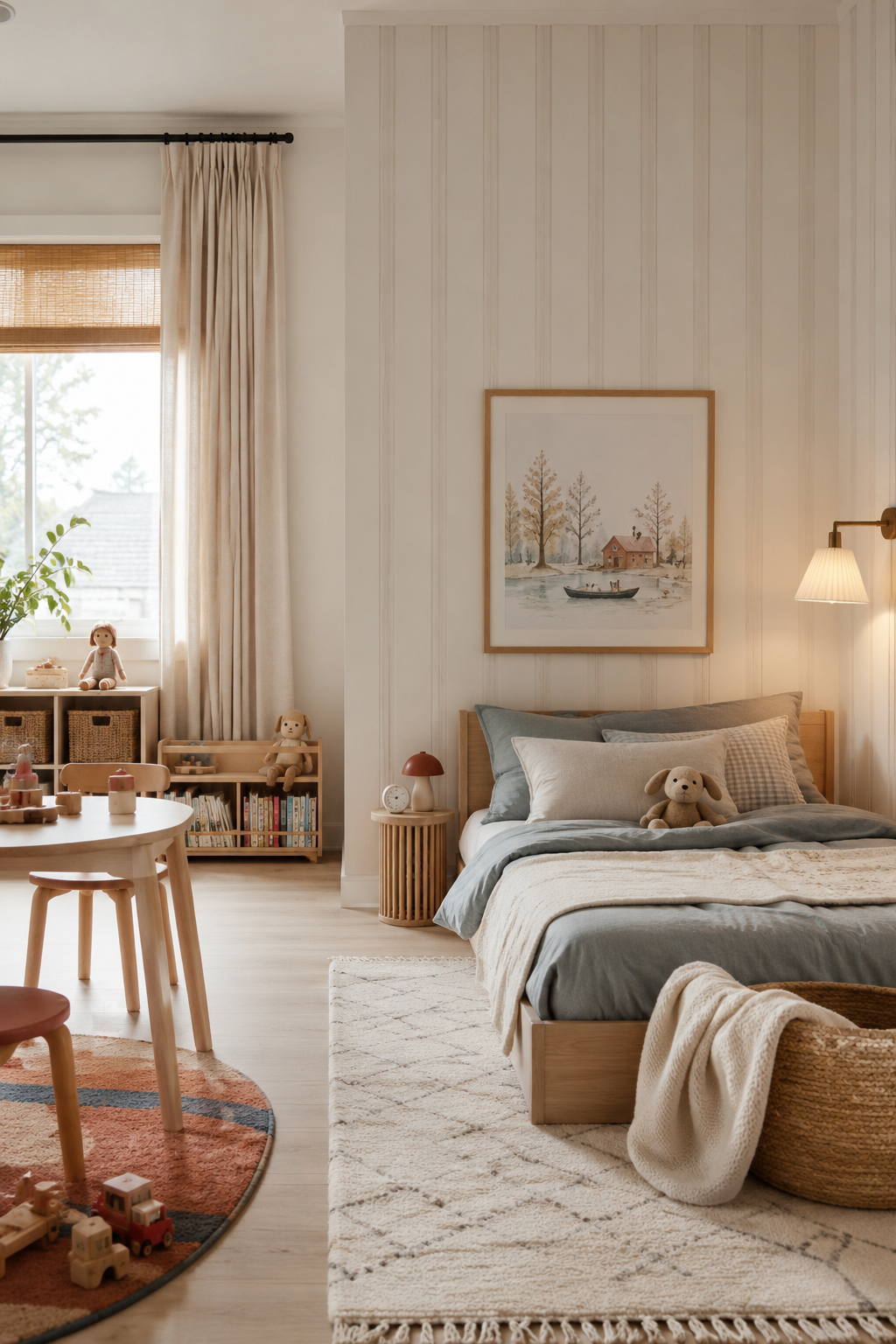
I let the play side carry the stronger colors and keep the bed corner noticeably quieter — simple bedding, one piece of art, a soft light. That contrast gives the eye somewhere to rest, and it’s what makes the whole room feel balanced rather than busy.
A quick safety note: Treat styled room photos as inspiration rather than a checklist for the sleep area. Follow the bed manufacturer’s age and setup guidance, and keep cords and window-covering cords out of reach.
14. Choose Textiles For The Way You Actually Live
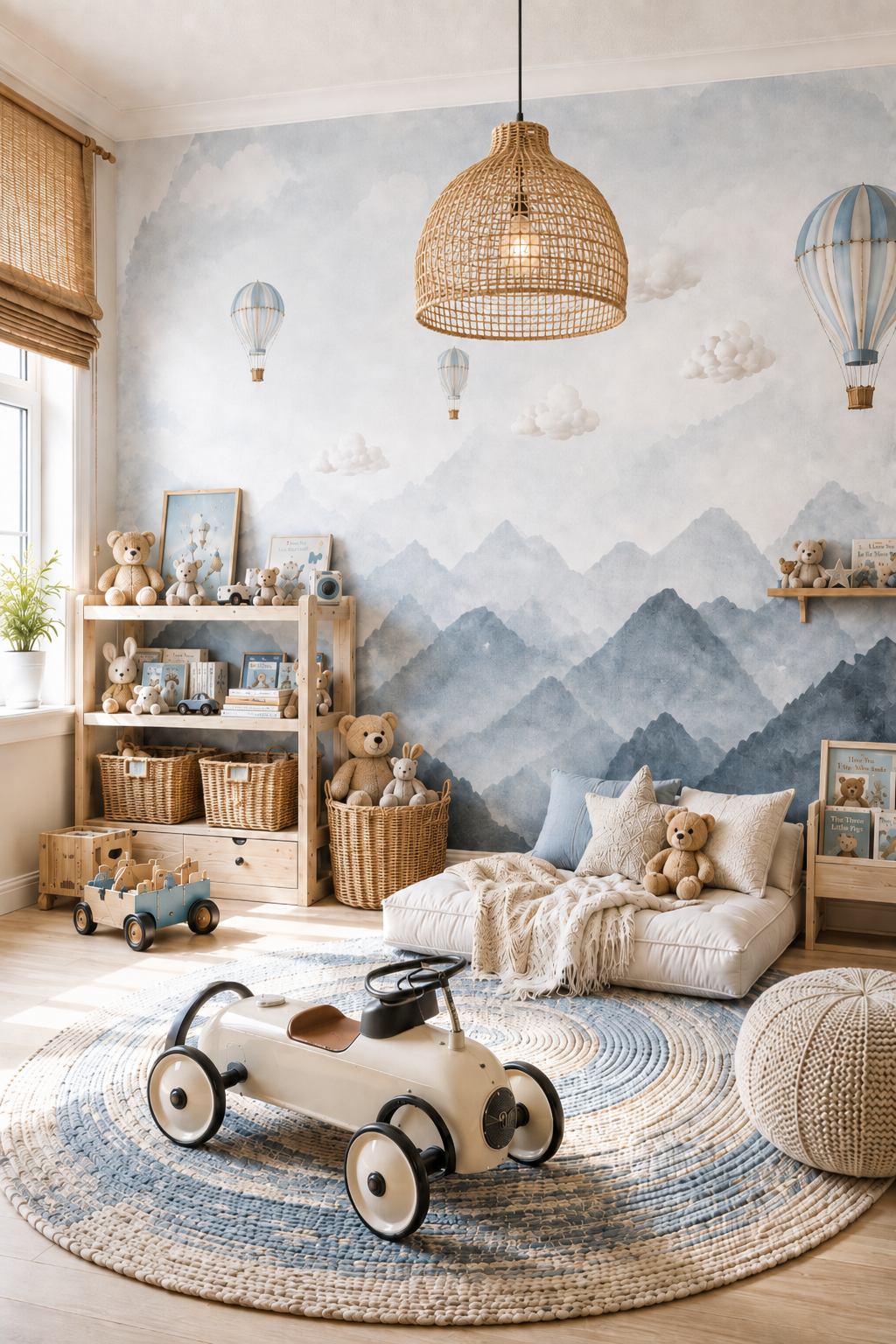
I read the care label before I fall for the pattern. For bedding, I want the whole set machine washable; for rugs, I check what’s actually washable, whether my size fits a home machine, and whether it needs a pad. “Family-friendly” only helps when the care instructions back it up — and I’d rather know before it’s on the floor.
15. Layer the Lighting For Play and Bedtime
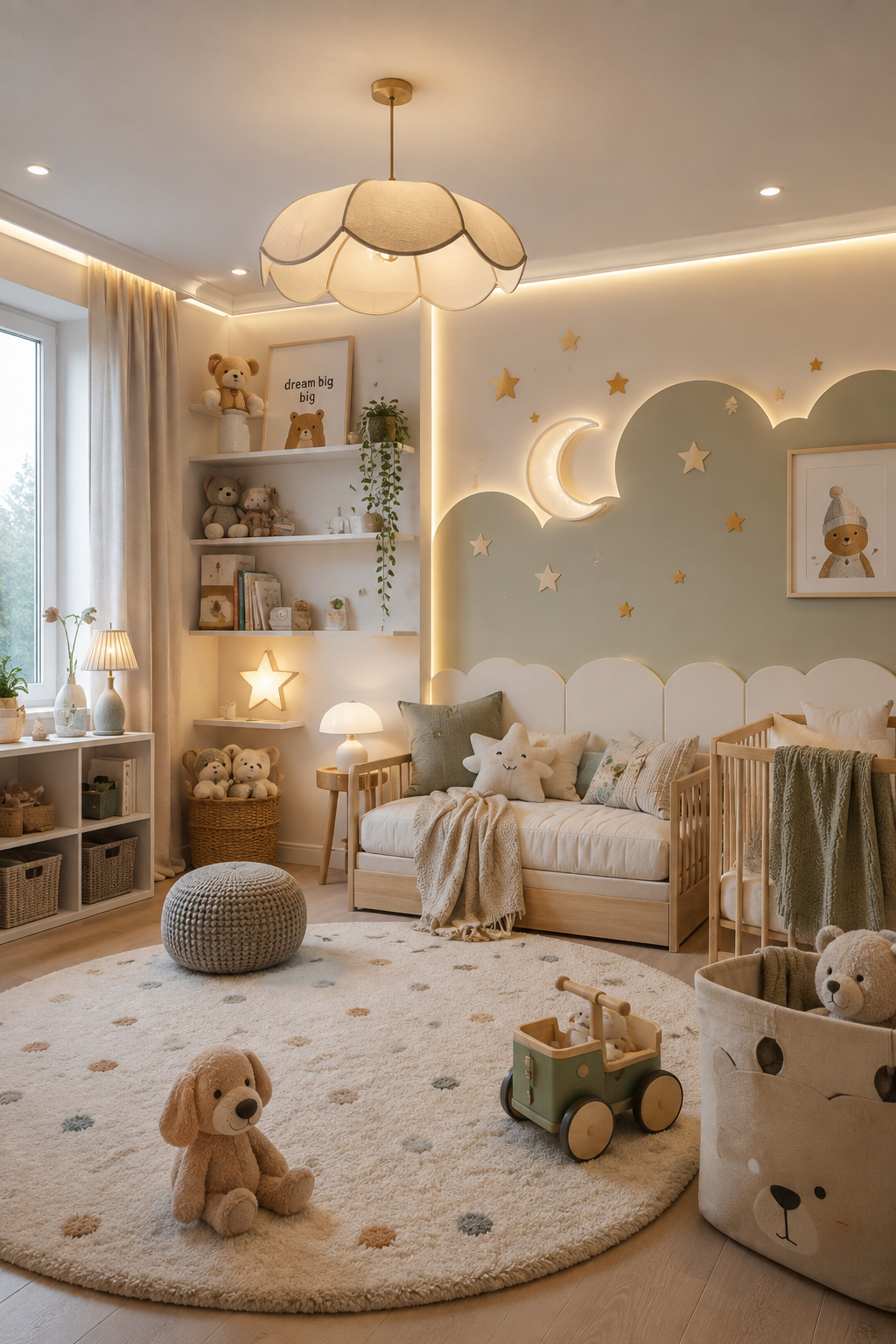
I like having a softer lighting option for the evening, separate from the bright light used for play and cleanup. The mood I’m after is a warm glow that says the day is ending. The shape of this moon wall lamp would bring a little character to that corner without taking up a tabletop. Check its brightness, color temperature, dimming and installation requirements first, and keep any cord safely out of reach.
16. Choose Pieces That Can Genuinely Grow With Them
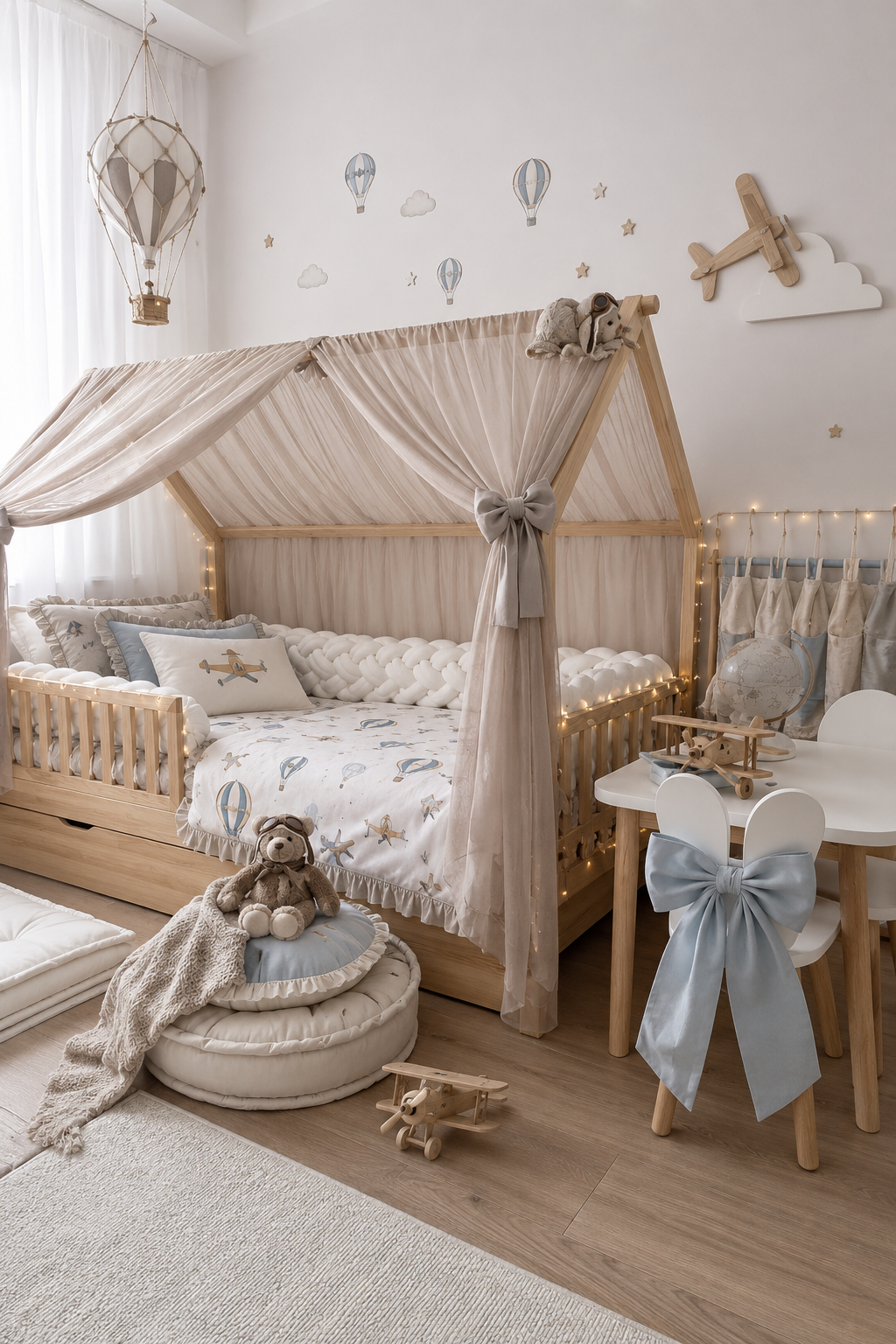
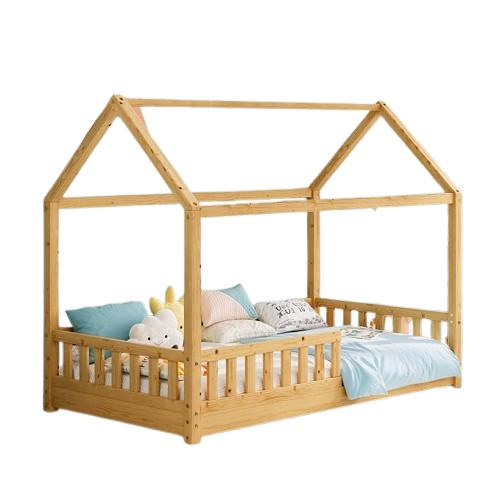
With furniture that promises to “grow with your child,” I want to know what that means in practice. A plain shelf could hold books now and craft supplies later. For a convertible bed, the included parts are one factor, alongside the dimensions and total cost. Before paying more, check the adjustment range and any extras required. A simple, suitable piece you already own may still be the better choice.
The Toddler Room Edit
Where I’d start
If it were my room and my budget, I’d sort the practical bones first and let the pretty parts follow. Sleep and clothes storage come first, then one good home for the toys, then the books somewhere a toddler can actually reach them. A rug earns its place next if the room needs grounding — and the table and the softer extras come last, once there’s clearly room to play.
You really don’t have to finish it all at once. For me, the moment cleanup gets simple and there’s floor to sprawl on, the important work is done — the rest is just the fun of watching the room slowly become theirs.